
Veryovkina - The Descent and Race to Escape the Deepest-known Cave on Earth!
A National Geographic Society expedition (2018) to document the team exploring the deepest-known cave on earth.

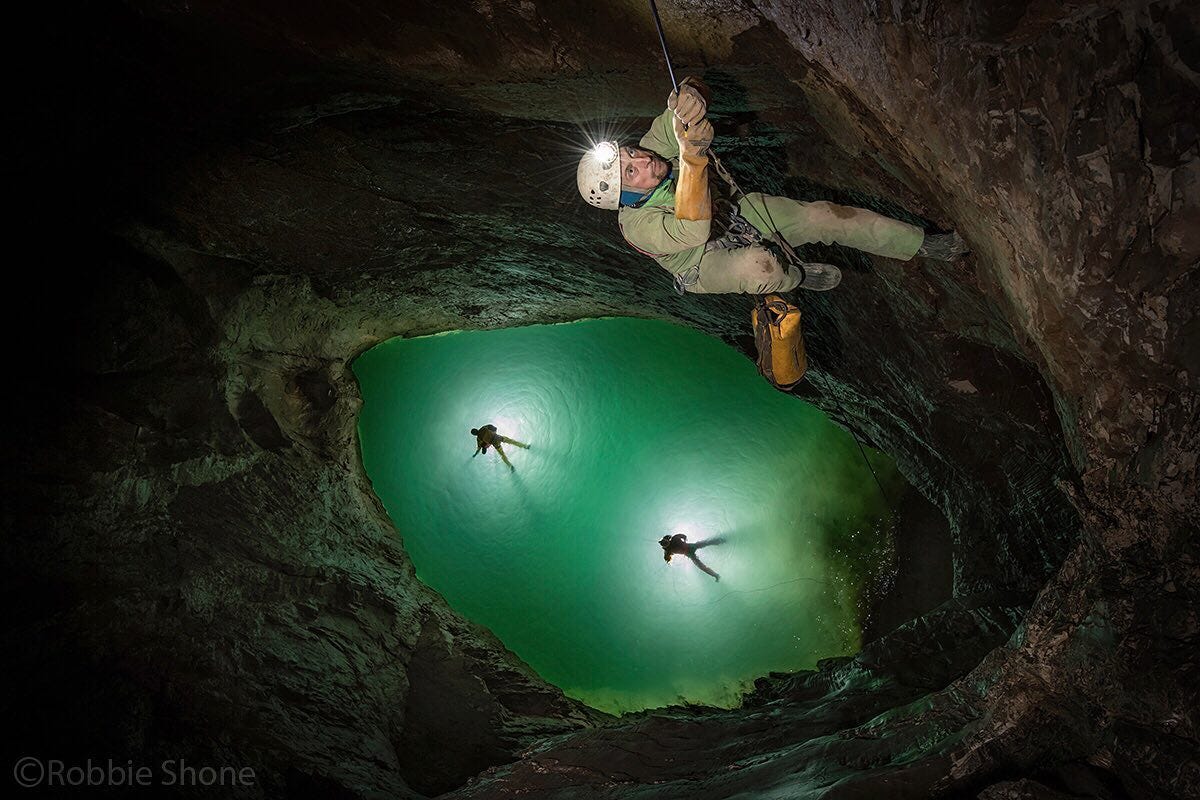
Veryovkina (Cave) is a true titan of the underground world; a relentless and punishing labyrinth that forces its explorers to confront not only physical exhaustion but the very core of their willpower. Its twisting passages that make up the -400 meters (1300 feet) deep entrance series are so narrow, and so torturous, that each movement feels like a battle. The very walls of this cave seem to shrink in on you as you make your way deeper, pushing through passages barely wide enough to fit a body or a camera, with nothing but your own strength keeping you moving forward.
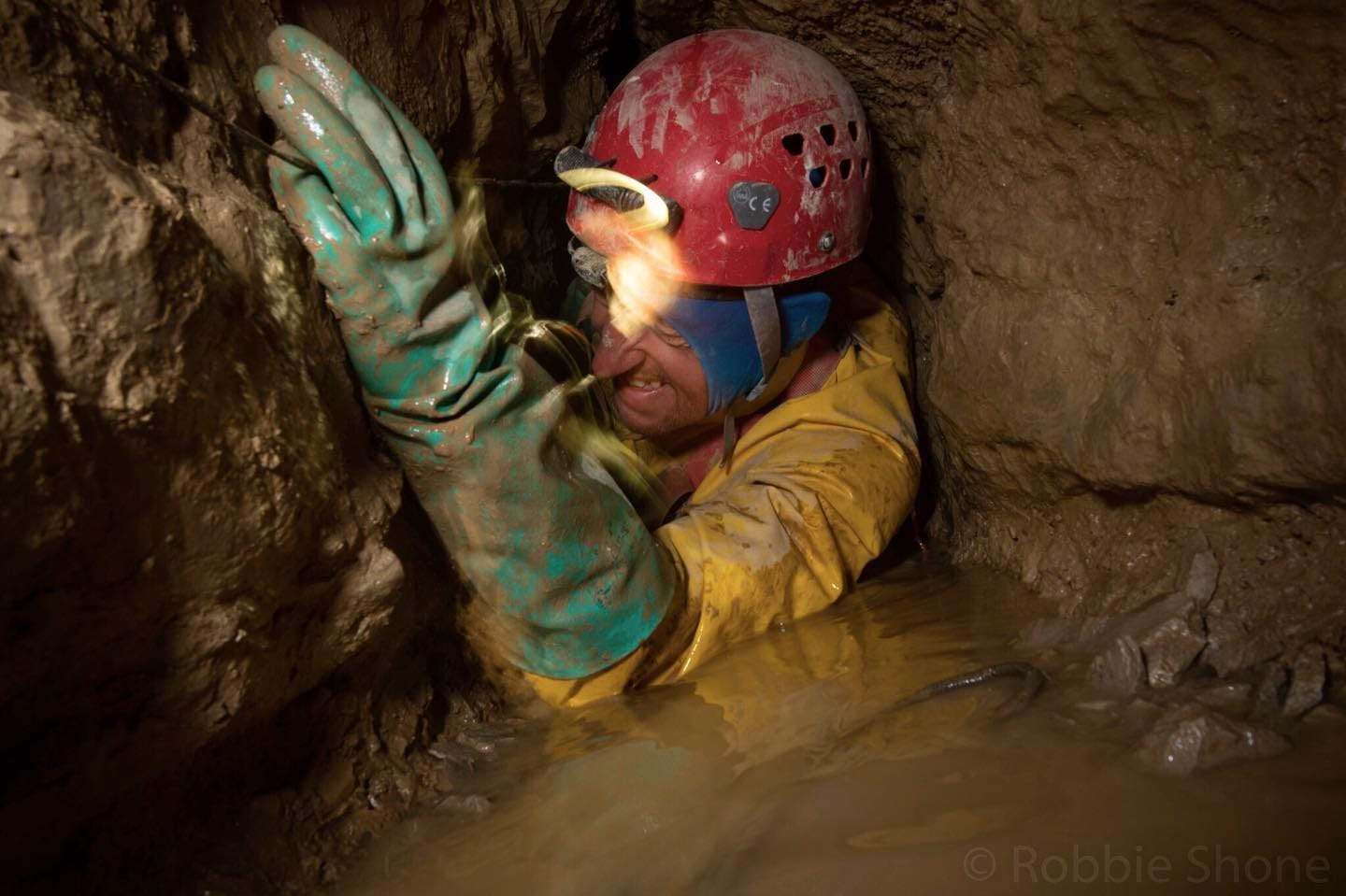
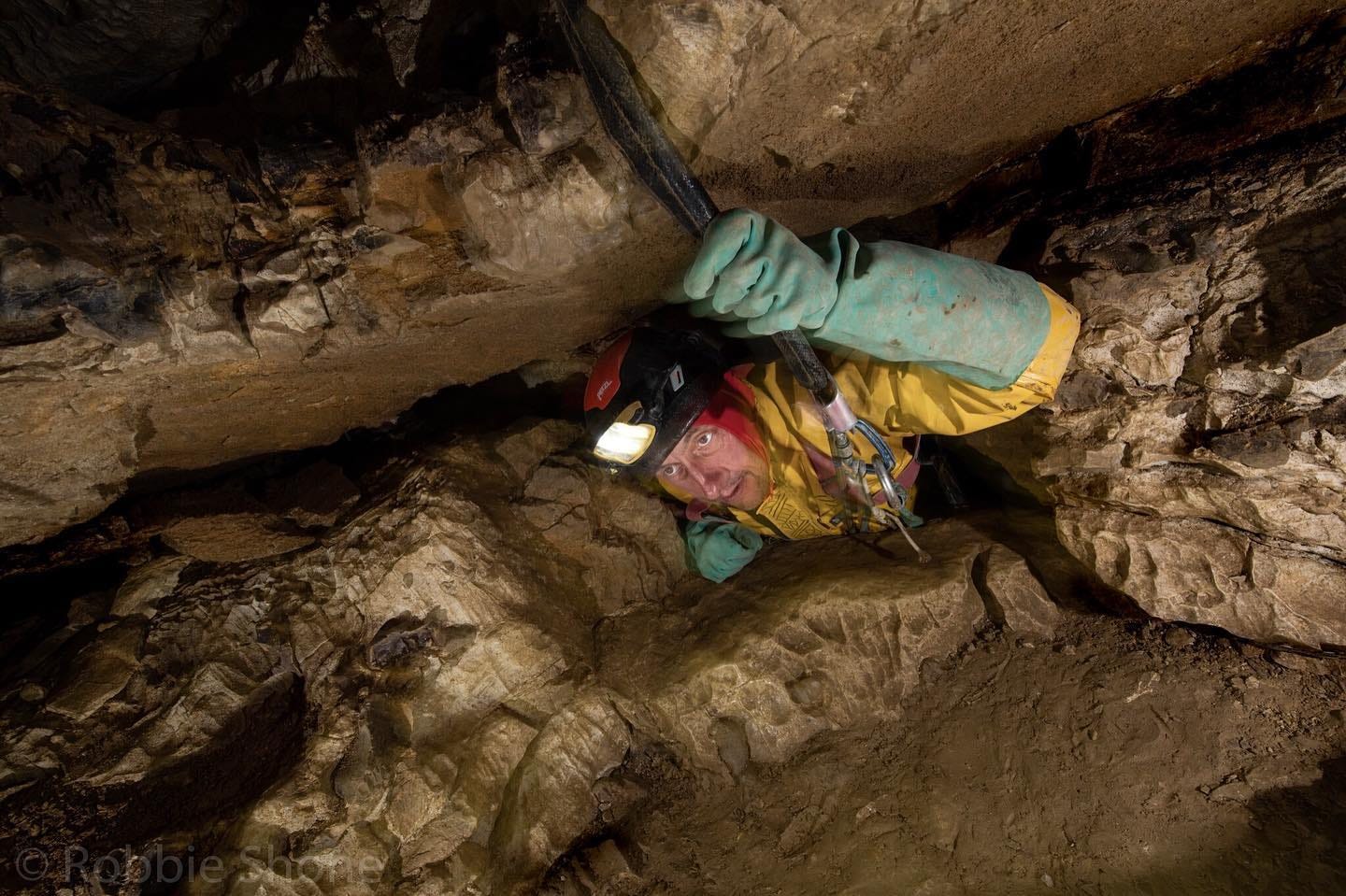
To reach the deepest known point, at a terrifying -2,212 meters (7,257 feet), one must navigate a series of underground camps located at staggering depths: -600 meters (2,000 feet), -1,350 meters (4,265 feet), and -2,100 meters (6,889 feet). With each camp a grueling 10-12 hour traverse away, burdened with 20 kg (44 lbs) of equipment, the journey is a test of endurance like no other. Four days of descending brought us to the heart of the cave, where we spent seven days at the lowest camp, surrounded by nothing but darkness and the overwhelming silence of the earth’s most uncharted depths.
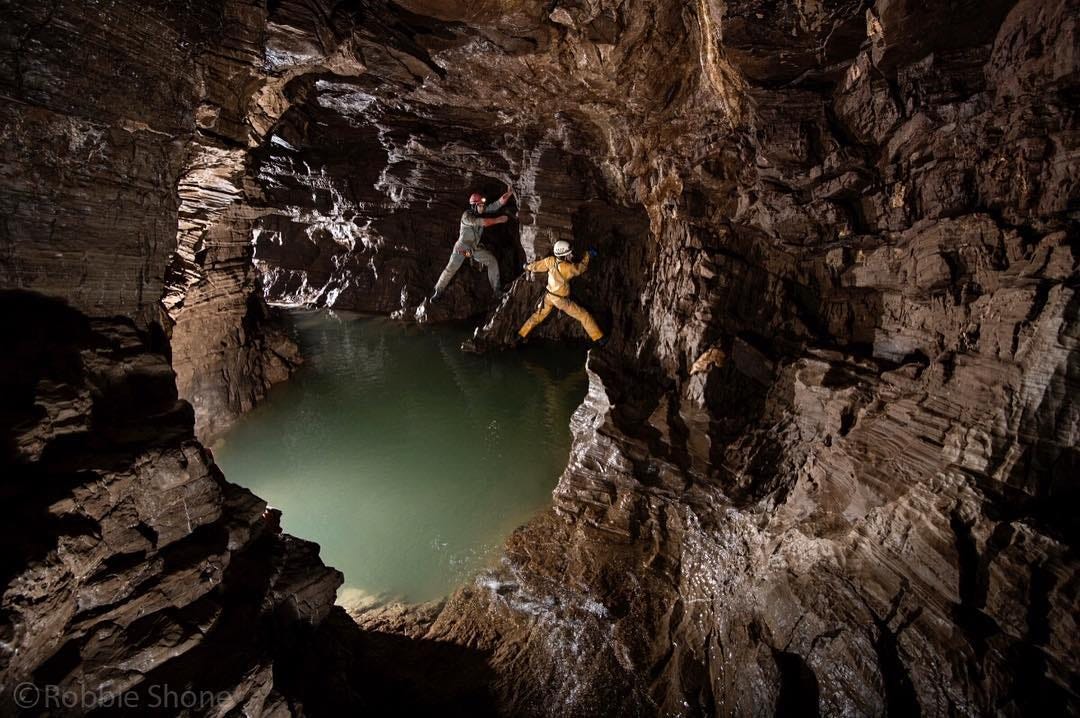
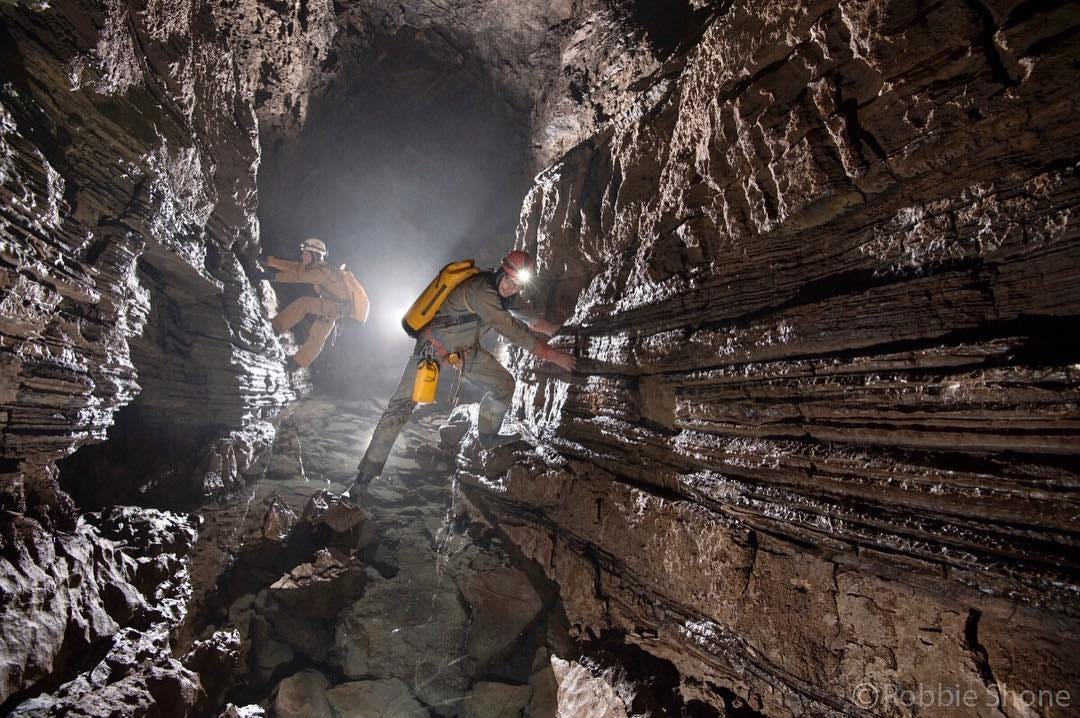
But then, on day seven, everything changed. The radio crackled and came into life, a call from two cavers further up the system at camp 2, warned us of a flood pulse racing toward us. We estimated we had 30 minutes, but no one understood the true danger that was bearing down on us.
The quiet, peaceful camp suddenly shattered as an ear-splitting roar erupted, a deafening sound like a freight train charging straight for us. The faint rumble got louder and louder to an unbearable crescendo, we all rushed out from inside the tent and raced to the balcony overlooking a pit leading down to all the lowest passage-ways we had been exploring during the previous week. We suddenly froze, wide-eyed, waiting for the inevitable. And then, the ground trembled. From the black void above, an enormous torrent of white and brown water descended upon us. It came crashing down like a living beast, surging past us, and then, just as quickly, it seemed to fade into the depths below, only to be replaced by an even more terrifying flood, roaring from the very belly of the cave.
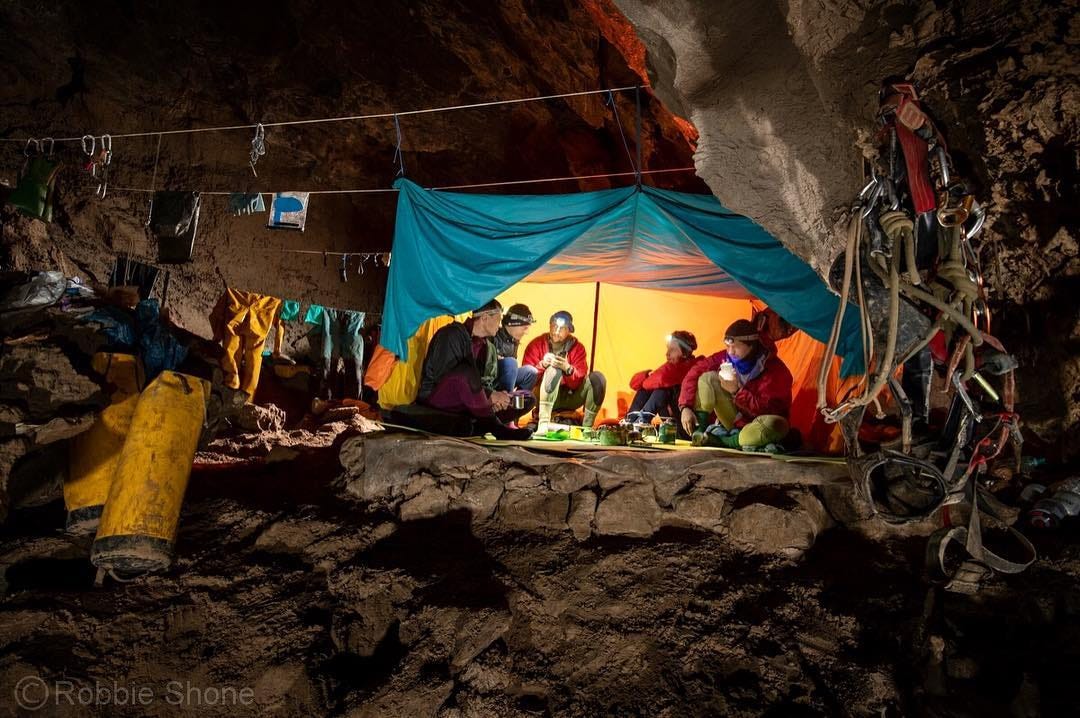
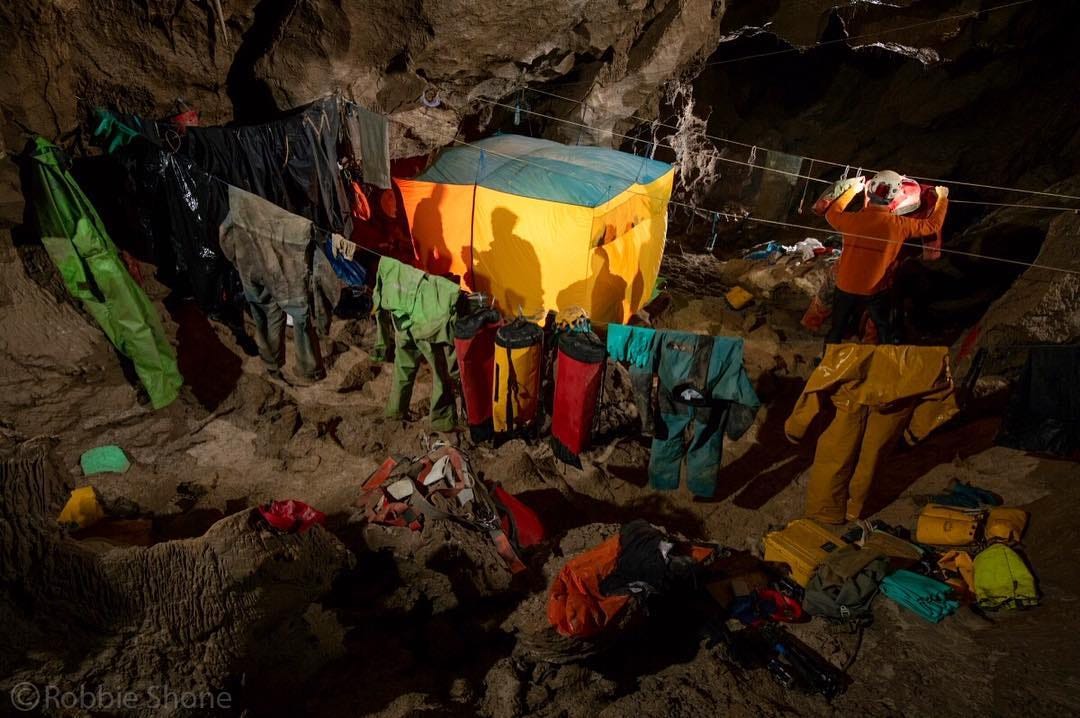
We monitored the situation and nobody left camp apart from the leader; the late (great) Pavel Demidov and another team member. They went to check the water level of a nearby siphon (the water-table). Whilst the pair were away, myself and Jeff Wade; my photo assistant, kept busy by taking photographs of the team in the tent at camp. One member went over to a nearby hole as he thought he heard a gurgling sound …but nothing. Less than five minutes later, he went back and checked again. I’ll never forget the look on his face, as he turned to me. He was white! I ran over and to my horror saw foaming water rising within the hole so fast! Panic set in. I turned to Jeff and said “we need to leave right now”. I looked at all my photography equipment laying around on the floor, and knew I didn’t have time to pack it away, let alone carry it up at speed. I did however, have time to grab the two memory cards from inside the camera. I put them into their plastic containers and then a waterproof bag, shoved them into my pocket. Every caver in camp knew we had to act fast. We threw on our dry suits, harnesses, and climbing gear, preparing for the impossible.
The water was rising. Fast.
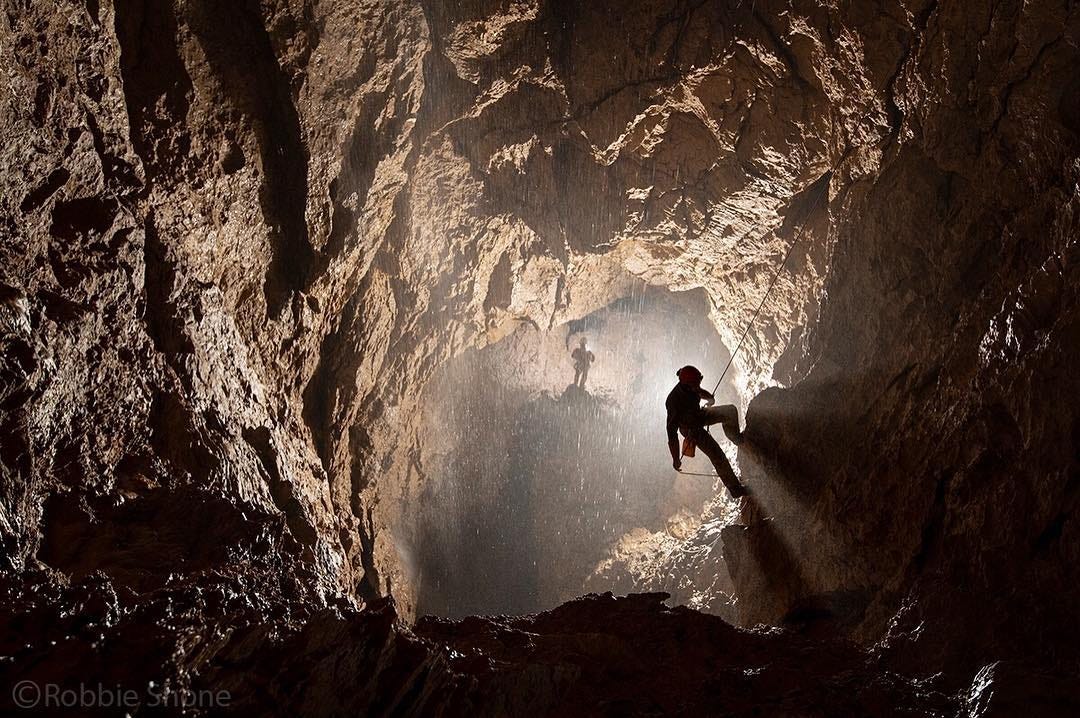
We had no choice but to move. First, we had to navigate a rocky traverse, a once-safe passage now soon to be submerged, by a growing lake. We crawled along a 1-meter ledge, barely above the surging water, before facing a sheer, 20 meter (60 feet) climb. The water now raged above us like a living storm, each step a battle against the flood and the cascading waterfalls that threatened to drag us under.
I was terrified! The roar of the water filled my ears, drowning out everything but the primal instinct to survive. In my haste, I lost track of Jeff, my assistant. For what felt like an eternity, I believed he and the team below were lost, swallowed by the unforgiving abyss. My heart pounded as I pushed forward, forever upwards and in the full force of the water. Eventually after over 100 meters of climbing, the rope went one way and the waterfall fell out from another way. I could get out of the water and climb the rope in a semi-dry shaft, but then came a voice, angry, but familiar. It was Jeff, shouting for me to slow down. I’d never been so relieved to hear frustration in his voice.
Together, we continued, hearts pounding, adrenaline surging. But the nightmare wasn’t over. As we reached higher ground, to our amazement the others appeared one by one, emerging from the darkness, drenched, exhausted, but alive. Pavel had been the last to leave the lowest camp. At which point, he was now swimming in the roof of the 10m (30 ft) high chamber with only a foot of airspace. His first attempt at reaching the rope failed as he got spat out of a whirlpool and grazed his face on the walls. By the time he finally managed to claw his way to the rope only seconds remained.
Still, we weren’t safe. The water kept rising, pushing us ever higher, until we found temporary refuge at the -1,900 meter camp. We huddled there, trapped between an impassable waterfall above and the relentless rising flood waters below. 16 hours of dread stretched before us, shifting in and out of shock, unsure of whether the water would claim us, or if we’d have the strength to keep fighting.
But the Russian cavers were strong, unyielding. They kept their spirits high. Amidst the chaos, they laughed, joked, and held each other together. Slowly, we too found some semblance of calm, though our minds never strayed far from the rising floodwaters. Whilst they relaxed and warmed up in the refuge of the temporary camp, I couldn’t! I remained fully clothed and in full “ascent” mode. I paced around outside, occasionally peering over the edge of the drop, fearing the worst! I needed to be ready to act, incase I saw the rising flood water suddenly appear! Thank-fully, it never did.
By the time the storm subsided, the damage was done. The return to the surface was a grueling four-day climb, and all my plans for photography vanished in the flood. My gear, my camera, tripod, and equipment, was lost or destroyed, swept away in the furious surge. The cave had claimed its prize.
Up at Camp 2, we all re-grouped. A rock the size of a small football fell from the roof a short distance above the canvas of the roof of the tent. It landed on Pavel’s head. It crushed him. He wasn’t badly hurt, but it was yet another reminder of our situation. I turned to Jeff and quitely said “Death is still in the cave… he’s after one of us!” I didn’t think about it, I just said it. It really felt like we were being chased.
When I reached the head of the second pitch, I could smell the vegetation of the surface and uncontrollingly I burst into tears. I was hit by an enormous wave of emotion, for I knew we’d made it. However, part of me thought I’d died down there and all of our bodies lay at the bottom of the cave and I was now a ghost, living out my life like it was always going to happen.
When I reached phone signal the following day, I called Gina, my parner, to tell her what had happened. She later said that I was very calm, very matter-of-fact on the phone. A few days later, we reached the coast and I called her again and our near-death-experience had began to sink in. Apparently I was a nervous wreck!
Despite the harrowing escape, there were lessons learned. The Russian team now knows the perilous speed at which the cave system can react to weather, an unforeseen danger in a system so deep, so vast. Plans were immediately put into place to develop better monitoring systems to prevent this from happening again.
For me, the trip was both exhilarating and terrifying. It was an experience I’ll never forget. I’ve spent nearly 25 years now working in caves, but this journey showed me just how unforgiving and unpredictable deep cave exploration can be. It’s not for the faint-hearted. It demands more than just technical skill. It demands strength, endurance, and a mind that can think on its feet when every second counts. These cavers, these unsung heroes, are pushing the limits of human exploration, in the deepest-known cave on Earth. To be part of their team was an honor, and a reminder that the limits of exploration are defined only by the courage of those who dare to venture into the unknown.
And for me, this trip was more than just a scientific expedition, as it was a stark reminder of the sheer power of the natural world. The abyss is always waiting. And it will always fight back. Following this expedition, it inspired me to start a family and I’m happy to say we have a four-year old daughter, Maddie.
In memory of Pavel Demidov, who sadly died on 23 August 2020 (aged 49) in a cave close to Veryovkina.
.